

Search
Find a Physician

Early Signs of Osteoarthritis









Medically Reviewed by
Christian J. Zaino, MDBlog
May 28, 2026
Most people never give osteoarthritis a second thought until it starts affecting their daily lives. You wake up one morning with stiff knees, or your fingers ache after a long day of typing, and suddenly you're wondering how long this has been brewing. Recognizing the signs of osteoarthritis early can make a real difference in how you manage the condition.
Once the pain sets in, the natural reaction is to look back and ask whether there were any warning signals you missed. The truth is, there usually were — subtle, easy-to-dismiss clues that something was changing in your joints. Most people chalk these up to age, overuse, or a bad night's sleep and move on without a second thought.
So instead of finding yourself in that position later, it's worth learning what to watch for now. Osteoarthritis is far more manageable when caught early, and knowing what to look for puts you a step ahead. This guide breaks down everything you need to know, from the basic biology to your real treatment options.
What is the average age for osteoarthritis?
Osteoarthritis is most commonly diagnosed in adults over 50, but it can appear much earlier — especially in people who've had joint injuries or who carry excess body weight. By age 60, a significant portion of the population shows at least some degree of joint degeneration on imaging, even if they don't have symptoms yet.
Age is the single biggest risk factor, but it's far from the only one. Among the known osteoarthritis causes, excess weight, repetitive joint stress, genetics, and previous injuries all contribute to how quickly the disease progresses. Women are also more likely to develop it than men, particularly after menopause.
That said, younger people aren't immune. Athletes who repeatedly stress the same joints, or anyone who's experienced significant joint trauma, can develop osteoarthritis well before middle age. The biological clock isn't the only thing driving this condition.
Osteoarthritis of the shoulder is a good example of how the disease can strike joints you might not immediately associate with age-related wear. Overhead athletes, people who've had rotator cuff injuries, and those with a history of shoulder dislocations are all at elevated risk, sometimes developing the condition in their 30s or 40s.
How do you detect osteoarthritis early?
Early detection mostly comes down to paying attention to your body. The earliest signs tend to be subtle — joint stiffness after waking up that lasts less than 30 minutes, a mild ache after activity that wasn't there before, or the occasional feeling that a joint is "catching" or grinding during movement.
One of the clearest early signs of osteoarthritis is this kind of morning stiffness that improves once you get moving. Unlike rheumatoid arthritis, which causes prolonged stiffness, osteoarthritis-related stiffness tends to ease within half an hour. That distinction matters when it comes to early identification.
Pain that flares up after physical activity and then settles with rest is another common early indicator. You might notice it after a long walk, a run, or even after sitting in one position for too long. At this stage, many people assume they've just overdone it — and sometimes they have — but when it keeps happening, it's worth taking seriously.
Also worth watching: localized tenderness when pressing on a joint, a slight reduction in your range of motion, or mild swelling around the joint area. None of these is dramatic on its own, but in combination and over time, they paint a clearer picture. Understanding joint degeneration at this level — as a gradual process with early physical signals — is what separates people who catch it early from those who don't.
How to diagnose osteoarthritis?
A formal diagnosis typically begins with a physical examination. Your doctor will assess how the joint moves, check for tenderness, evaluate for swelling or fluid in the joint (called an effusion), and ask about the pattern and duration of your symptoms. From there, imaging is usually the next step.
X-rays are the standard diagnostic tool for osteoarthritis. They can reveal narrowing of the joint space, bone spur formation, or changes in bone structure — all hallmarks of degenerative joint disease. MRI scans are sometimes used to provide a more detailed view of cartilage and soft-tissue damage, particularly in earlier stages when X-ray findings may still be minimal.
Blood tests aren't used to diagnose osteoarthritis directly, but they can help rule out other conditions like rheumatoid arthritis or gout. If there's significant joint swelling, a doctor might also analyze fluid drawn from the joint to confirm what's going on.
A key thing to understand is that imaging and symptoms don't always align. Some people have significant structural changes on an X-ray but very little pain, while others experience considerable discomfort with minimal visible damage. Diagnosis is always a combination of clinical judgment and test results, not one or the other.
What are the 4 stages of osteoarthritis?
Osteoarthritis is generally classified into four stages, each reflecting the degree of cartilage breakdown and joint damage. Knowing where you fall on this spectrum shapes everything from your treatment plan to your long-term outlook.
- Stage 1: Minor: Minor wear on the joint surface with little to no pain. Bone spur growth may begin. Most people don't seek medical attention at this point because symptoms are so minimal they're easy to dismiss.
- Stage 2: Mild: More noticeable bone spur growth, though cartilage is still largely intact, but beginning to thin. Pain after physical activity becomes more consistent, and joint stiffness after rest is more apparent.
- Stage 3: Moderate: Cartilage erosion accelerates, and the gap between bones starts to narrow. Pain during everyday activities like walking or climbing stairs becomes a regular occurrence, and inflammation is more likely at this stage.
- Stage 4: Severe: Cartilage is largely gone, bones may be rubbing directly against each other, and pain is often constant. Significant loss of joint function is common, and surgical options are frequently discussed.
Among the osteoarthritis causes that accelerate this progression are obesity, a sedentary lifestyle, and prior joint injuries. Catching the condition in stages one or two dramatically expands your treatment options — which is yet another reason why early awareness matters.
Can you treat osteoarthritis?
Osteoarthritis treatment has advanced considerably, and while there's currently no cure, the condition is very much manageable — especially when addressed early. The goal of treatment is to reduce pain, slow progression, and maintain as much joint function as possible.
Physical therapy is one of the most effective first-line approaches. Strengthening the muscles around the affected joint reduces the load on cartilage and can significantly improve day-to-day function. Weight management is also a cornerstone of osteoarthritis treatment, particularly for knee and hip osteoarthritis, where every extra pound adds significant compressive force to already-stressed joints.
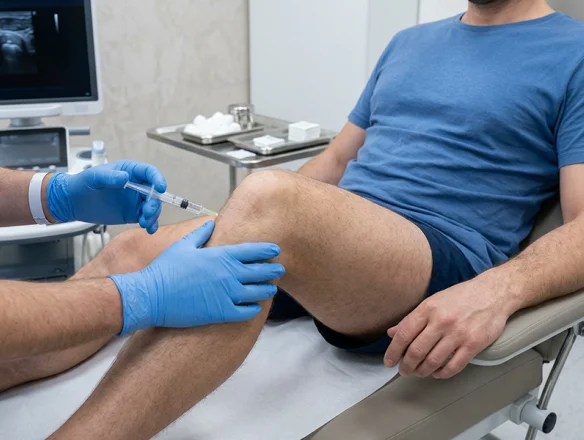
Medication-wise, over-the-counter anti-inflammatories and pain relievers are commonly used, along with topical treatments applied directly to the joint. Corticosteroid or hyaluronic acid injections are options when symptoms become more severe, offering temporary but meaningful relief. You might wonder, does arthritis go away with consistent treatment? The structural damage doesn't reverse — but symptoms can be managed very effectively, and progression can be slowed with the right approach.
For those in later stages, surgical interventions like joint replacement or arthroscopy may be considered. Advancements in treating osteoarthritis have also brought newer options to the table, including regenerative therapies like platelet-rich plasma (PRP) injections and stem cell research that may one day change what's possible for patients at any stage.
Conclusion
Knowing the signs of osteoarthritis puts you in a much stronger position than most people find themselves in when a diagnosis finally arrives. The condition rarely announces itself loudly at first — it builds quietly, through small aches and stiff mornings that are easy to explain away. The earlier you take those signals seriously, the more options you'll have.
Degenerative joint disease doesn't have to mean a steady decline in quality of life. Whether you're managing early symptoms or supporting someone who is, " Does arthritis go away on its own is the wrong question — the right one is what you can do today to slow it down. With the right information and care, a lot is possible.
Recognizing the early signs of osteoarthritis can make a big difference—schedule a consultation with Orthopedic Institute of NJ to get ahead of joint pain and stay active longer.

OINJ PHYSICIAN’S ADVICE
Osteoarthritis becomes ubiquitous with age. Every joint can be effected. However the degree of damage and the amount of pain vary immensely. At OINJ we customize a treatment plan for you specific case with the most up-to-date modalities.
Christian J. Zaino, MD
Orthopedic Surgeon at OINJ






Related News & Insights
Understanding Joint Degeneration: Causes and Prevention of Osteoarthritis
![Woman holding knee with joint degeneration]()

Blog
Mar 5, 2025
Understanding Joint Degeneration: Causes and Prevention of Osteoarthritis
Read More
Mar 5, 2025


What Is the MACI Procedure? A Guide to Cartilage Restoration and Joint Preservation
![ppatient with knee brace after MACI procedure]()

Blog
Jul 31, 2026
What Is the MACI Procedure? A Guide to Cartilage Restoration and Joint Preservation
Read More
Jul 31, 2026
How Regenerative Medicine for Joint Pain Can Help You Avoid Surgery
![woman with joint pain stretching outdoors]()

Blog
Jul 15, 2026
How Regenerative Medicine for Joint Pain Can Help You Avoid Surgery
Read More
Jul 15, 2026