

Search
Find a Physician

PRP vs. Cortisone Injections: Which Is Better for Joint Health?





Medically Reviewed by
James P. Moran, DOBlog
May 28, 2026
Imagine waking up every morning with that same dull ache in your knee or shoulder, wondering whether today is the day you finally do something about it. You've heard about injections — maybe from a friend, maybe from your doctor — and now you're stuck weighing your options. The debate around PRP vs. cortisone is one that more and more patients are having with their physicians, and for good reason.
Cortisone has been around for decades, and it works fast. You walk in, get the shot, and within a day or two, the inflammation is down, and you're moving more easily. But there's always that nagging question: Is fast the same as good? Many people who've gone the cortisone route report the relief wearing off after a few months, leaving them right back where they started — or sometimes worse.
PRP, or platelet-rich plasma therapy, takes a different approach entirely. Instead of suppressing inflammation with a synthetic compound, it uses your own blood to stimulate healing. It's slower, it's newer, and for someone sitting on the fence about treatment, here's what you need to know before making that call.
What Is the New Alternative to a Cortisone Shot?
For a long time, cortisone was the go-to answer for joint inflammation — and in many cases, it still gets the job done. You see, the issue isn't that cortisone is ineffective. It absolutely can reduce swelling and manage pain in the short term. The problem is that it doesn't repair anything. It quiets the joint down without addressing what's actually causing the problem.
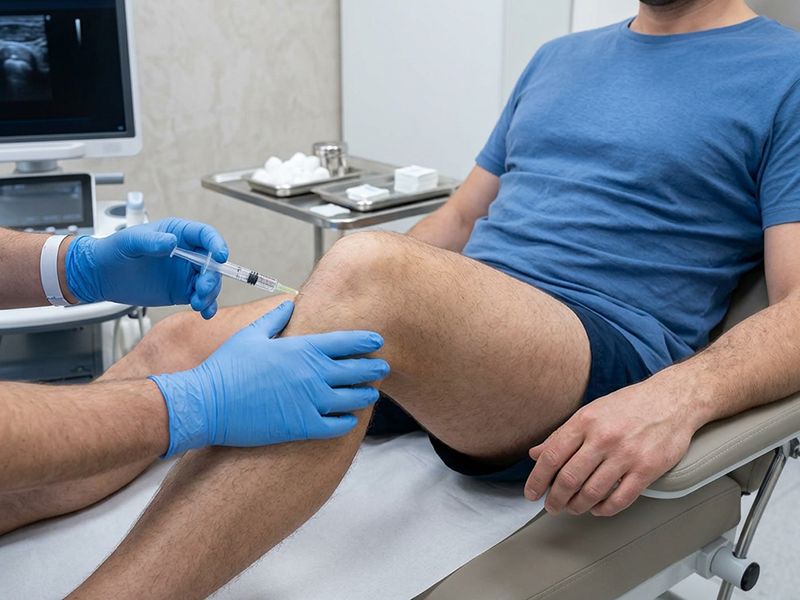
That's where PRP comes in as the newer alternative. Platelet-rich plasma is derived from your own blood sample, which is spun in a centrifuge to concentrate the growth factors and healing proteins. That concentrated solution is then injected directly into the damaged area to kickstart the body's own repair process.
Recent years have seen serious advancements in platelet-rich plasma therapy, particularly in how the treatment is prepared and delivered. Clinicians can now fine-tune platelet concentration and tailor the injection to the specific tissue being treated, which has considerably improved outcomes across different conditions.
Also worth noting is the idea of natural cortisone — a concept that refers to the body's own anti-inflammatory response, which PRP is actually designed to support rather than replace. Unlike synthetic cortisone, PRP doesn't suppress immune function or risk accelerating cartilage breakdown with repeated use. For patients seeking an alternative to cortisone injections in the knee, especially those with long-term conditions, PRP is increasingly the first recommendation from orthopedic specialists.
Is There a Better Option Than PRP?
Calling any one treatment definitively "better" is tricky, because joints are complicated, and so are the people attached to them. What works brilliantly for one patient's hip might do very little for someone else's ankle. However, you see a pattern emerge when you look at the research: PRP tends to outperform cortisone over longer time horizons, while cortisone wins on speed.
There are also combination approaches worth considering. Some clinicians first use cortisone to control acute inflammation, then follow up with PRP once the joint is in a more stable state. This isn't universally accepted, but it's a strategy that some sports medicine doctors use for patients who need rapid relief before a more regenerative treatment can take effect.
Stem cell therapy is another option that occasionally comes up when comparing it to PRP. It's more expensive, less standardized, and the evidence base is still catching up. For most patients dealing with moderate joint damage, PRP injections for joint pain remain the more accessible and better-studied regenerative choice available today.
The honest answer is that the "better" option depends entirely on what you're treating, how long you've had it, your age, activity level, and what you're hoping to get back to. A conversation with a sports medicine specialist or orthopedic surgeon — ideally one familiar with both options — is the most reliable way to figure that out.
PRP or Steroid Injection: Understanding the Core Difference
This is the question most patients are really asking when they sit down with their doctor: Do I go with the tried-and-true steroid, or do I try the newer biological approach? PRP or steroid injection choices often come down to one key factor — are you trying to manage the pain, or are you trying to fix the problem?
Steroids, including cortisone, are anti-inflammatory agents. They work by blocking the chemical signals your body uses to trigger swelling and pain. That's genuinely useful in acute situations, like a sudden flare-up after overexertion. The relief can be significant, and for some patients, a single cortisone shot buys them months of comfortable movement.
PRP works on an entirely different principle. Rather than suppressing the body's response, it amplifies the healing side of that response. The growth factors in platelet-rich plasma signal tissue repair, encourage collagen production, and promote better blood flow to the damaged area. It takes longer — sometimes four to six weeks before noticeable improvement — but the changes it drives can be more lasting.
One practical consideration: cortisone injections are typically covered by insurance, while PRP often isn't. That financial reality plays a role in many patients' decisions, regardless of what the clinical evidence says.
Rotator Cuff PRP: What the Research Says
Shoulder pain is one of the most common complaints in both athletes and older adults, and rotator cuff issues are frequently at the center of it. The rotator cuff is a group of four muscles and their tendons that stabilize the shoulder joint, and it's notoriously vulnerable to wear, overuse, and acute injury.
PRP has become a serious topic in rotator cuff treatment, particularly for partial tears and tendinopathy. Studies have shown that PRP injections can reduce pain and improve function in patients with chronic rotator cuff conditions, especially when conservative treatments like physiotherapy haven't delivered results.
For full-thickness rotator cuff tears, surgery remains the primary recommendation. However, PRP is increasingly being used as a post-surgical support tool — injected into the repair site to promote faster, stronger healing of the tissue. Some surgeons now incorporate it as a standard part of their surgical protocol.
Cortisone, on the other hand, is generally used for short-term pain relief in rotator cuff cases rather than for any structural benefit. Moreover, repeated cortisone injections in the shoulder have been associated with tendon weakening over time, which is a meaningful concern in a structure already under mechanical stress.
Tennis Elbow and Cortisone Injections: A Complicated History
Tennis elbow — or lateral epicondylalgia, to use the clinical name — is one of those conditions where the cortisone conversation gets particularly interesting. For years, cortisone was the standard of care. Patients came in with elbow pain, got a shot, felt much better within a week, and went back to their lives. Simple.
The problem is that follow-up research significantly complicates that picture. Several studies found that while cortisone produced superior short-term outcomes, patients who received it actually had worse results at twelve months compared to those who received physiotherapy or even just waited. The early relief, it turned out, may have masked the condition rather than resolved it.
Here's what that research has changed in clinical practice:
- Many physiotherapists and sports doctors now actively discourage cortisone for tennis elbow unless pain is severe enough to prevent participation in rehabilitation
- PRP has emerged as a stronger long-term option, particularly for patients who have had symptoms for more than three months
- A combination of load management, physiotherapy, and PRP injections for joint pain in the elbow is now considered best practice in many sports medicine settings
- Cortisone still has a role in acute flare-ups, but is rarely recommended as a standalone solution
- Some clinicians use a "wait and see" approach for mild cases, given that tennis elbow often resolves on its own within twelve months
The takeaway here isn't that cortisone is bad — it's that context matters enormously. For tennis elbow specifically, the evidence strongly favors approaches that support tissue repair over those that simply dampen the pain signal.
Wrap Up
The PRP vs. cortisone debate doesn't have a single winner, and anyone who tells you otherwise is oversimplifying. Both treatments have real clinical value, and the right choice depends on the specific joint, the nature of the injury, how long you've had symptoms, and what you're ultimately trying to achieve. Cortisone wins on speed; PRP has the edge on durability.
What's clear is that regenerative medicine is moving fast, and PRP is no longer the experimental option it once was. If you're dealing with a persistent joint problem and short-term fixes haven't held, it's worth having a direct conversation with your doctor about whether PRP is appropriate for your situation. The goal, after all, isn't just less pain — it's a joint that actually functions.
Whether you choose PRP or cortisone, the best option depends on your unique needs—schedule a consultation with Orthopedic Institute of NJ to find the right path for protecting your joint health and staying active.

OINJ PHYSICIAN’S ADVICE
The human body has healing powers, and a lot of that power exists in your own blood…when platelets are separated and concentrated, it can jump-start healing in chronic injuries and also accelerate the acute injury repair process.
James P. Moran, DO
Sports Medicine and Orthopedics Physician at OINJ