


Search
Find a Physician

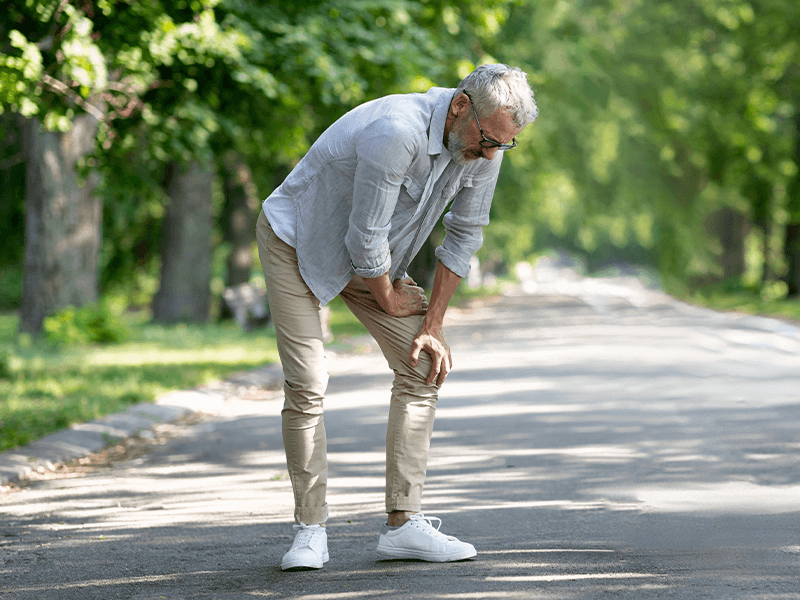
Knee Pain When Walking: Causes and When to See a Doctor

Robert A. DeFalco, Jr., DO
![Robert A. DeFalco, Jr., DO]()

Robert A. DeFalco, Jr., DO
- Orthopedic Surgery
- Shoulder & Knee
- Sports Medicine





Medically Reviewed by
William Sayde, MDBlog
Oct 7, 2026
A sore knee can turn a walk around the block or a trip to the store into something you dread. You're far from alone, too. Researchers estimate that about 14 million people in the US live with symptomatic knee osteoarthritis, and more than half are younger than 65.
So when should you worry? Knee pain that lingers, gets worse, limits your activity, or comes with swelling, instability, locking, or a recent injury needs a medical evaluation.
Why Does My Knee Hurt When I Walk?
Every step you take sends force through your knee, the hinge joint where your thighbone, shinbone, and kneecap meet. Cartilage and two C-shaped pads called menisci cushion that contact, while ligaments and tendons hold everything in line. When any of those parts get irritated, worn down, or injured, walking can bring on the pain or make it worse.
Your pain pattern can say a lot about its source. Pain that builds slowly over months often points to joint wear, while pain that started with a twist, a fall, or a pop usually signals an injury to a ligament or meniscus. Where it hurts matters as well, whether that's the front, inner side, outer side, or back of the knee.
Your knee doesn't work alone, you see. Mayo Clinic notes that hip or foot problems can change the way you walk and put extra strain on the knee. Extra body weight, weak thigh muscles, and a past knee injury can also raise your risk, since each one changes how load moves through the joint.
Some causes clear up with rest and a few simple changes, while others need a proper diagnosis before they get worse. Knowing the most common culprits helps you describe your symptoms clearly and understand what your doctor may look for during an exam.
Causes of Knee Pain When Walking
Most knee pain during walking traces back to a handful of conditions. Here are the ones orthopedic specialists see most often:
- Osteoarthritis: The cartilage that cushions the joint wears down over time, which leads to knee arthritis symptoms like pain, stiffness, and swelling that often feel worse in the morning or after sitting.
- Meniscus tear: A twist or pivot can tear this rubbery cartilage. According to OrthoInfo, stiffness and swelling can develop over two to three days, and the knee may catch, lock, or give way.
- Patellofemoral pain syndrome: Also called runner's knee, this condition causes a dull ache around the kneecap that flares on stairs, during squats, or after sitting with bent knees.
- Ligament injuries: Tears of the ACL, MCL, or PCL often happen during sports or falls and can leave the knee feeling loose or unstable.
- Tendinitis: Overuse can inflame the patellar tendon, which connects the kneecap to the shinbone, and cause pain just below the kneecap.
- Bursitis: Irritation of the small fluid-filled sacs that cushion the knee can cause swelling and tenderness, often over the kneecap.
- Iliotibial (IT) band syndrome: Tightness in the band of tissue along the outer thigh can cause pain on the outside of the knee, especially in runners and cyclists.
- Gout and inflammatory arthritis: Gout, pseudogout, and rheumatoid arthritis can cause flares of pain, warmth, and swelling that come on quickly.
Many of these conditions share similar symptoms, which is why an exam and imaging matter so much when pain sticks around.
Signs Your Knee Pain Needs Medical Attention
Not every sore knee calls for an appointment. A mild ache after a longer walk than usual, a new workout, or a full day on your feet often eases within a few days with rest, ice, and lighter activity. When overuse is the cause, knee pain can go away on its own.
Pain that hangs around is a different story. If a couple of weeks of home care don't bring clear improvement, or the pain returns each time you get active again, it's time for a specialist to take a look. Watch closely for these warning signs:
- Pain that lasts more than a couple of weeks or gets worse over time
- Swelling that doesn't go down, or a knee that looks puffy next to the other one
- A knee that buckles, feels loose, or gives way when you walk
- Knee locking or catching, where the joint gets stuck and won't straighten fully
- Trouble fully bending or straightening your leg
- Pain that wakes you at night or shows up while you rest
- Pain that stops you from walking your usual distance or handling daily tasks
Any of these symptoms can mean something structural is going on inside the joint, so booking an orthopedic evaluation is the smart next step.
Some situations can't wait for a scheduled visit. Mayo Clinic advises calling your doctor if you can't bear weight on the knee, notice an obvious deformity, have marked swelling, or feel severe pain after an injury. For twists, falls, and sports injuries, OINJ's orthopedic urgent care centers let you see an orthopedic provider without a trip to the ER. A hot, red, swollen knee paired with a fever needs emergency care right away, since it can signal a joint infection.
This quick guide can help you match what you feel to a sensible next step:
|
What you notice |
What it may point to |
Your next step |
|
Mild ache after more walking or activity than usual that eases within a few days |
Overuse or muscle soreness |
Rest, ice, lighter activity, and watch for changes |
|
Dull ache that lasts for weeks, morning stiffness, or pain on stairs |
Osteoarthritis, patellofemoral pain, or tendinitis |
Schedule an orthopedic evaluation |
|
Swelling, catching, locking, or a knee that gives way |
Meniscus tear, ligament injury, or loose cartilage |
Book an evaluation soon and cut back on strenuous activity |
|
A pop at the moment of injury, fast swelling, or you can't put weight on the leg |
Ligament tear or fracture |
Visit orthopedic urgent care the same day |
|
Red, hot, swollen knee with a fever |
Possible joint infection |
Go to the emergency room |
Treat this table as a starting point for your decision, since only a hands-on exam can confirm what's behind your pain.
How Is Knee Pain Diagnosed?
An orthopedic specialist starts with your story. Expect questions about when the pain began, whether an injury came first, where exactly it hurts, and which activities make it better or worse. Details like morning stiffness, swelling after walks, or a knee that buckles on stairs help narrow the list of possible causes quickly.
Next comes a physical exam. Your doctor checks the knee for swelling, warmth, tenderness, and bruising, then tests how far it bends and straightens. Gentle stress tests show how well the ligaments hold, and the McMurray test, which involves bending, straightening, and rotating the knee, can reveal a meniscus tear. Your doctor may also watch you walk.
Imaging fills in what the exam can't show. Depending on your symptoms, your specialist may order one or more of these tests:
- X-rays show bone, narrowing of the joint space, and bone spurs linked to arthritis of the knee
- MRI scans reveal soft tissue damage, including meniscus tears, ligament injuries, and cartilage problems
- CT scans give a detailed look at bone when X-rays don't tell the full story
- Blood tests or joint fluid analysis help identify gout, rheumatoid arthritis, or infection
Once the results come in, your specialist can match the findings to your symptoms and explain what's happening inside the joint.
This step matters because two knees that hurt in the same spot can need very different care. A meniscus tear and early arthritis can feel alike on a walk, yet the right plan for each looks quite different. A clear diagnosis saves you from guessing and spending weeks on the wrong fix.
How Knee Pain Is Treated at OINJ
Treatment depends on what's causing your pain and how much it affects your daily life. At the Orthopedic Institute of New Jersey (OINJ), most patients start with conservative care, and for many people, that's enough to get back to comfortable walking. Surgery enters the conversation when the damage calls for it or other options stop helping.
Nonsurgical treatments available at OINJ include:
- Rest, ice, and activity changes to calm irritated tissue
- Physical therapy referral to strengthen the thigh and hip muscles that support the knee
- Anti-inflammatory medication for pain and swelling
- Corticosteroid injections to ease inflammation inside the joint
- Hyaluronic acid injections (gel injections) for some cases of mild arthritis
- Supportive options like bracing, Kinesio taping, and compression sleeves for knee pain
These approaches work best when they match the diagnosis, which is why your plan starts with the exam results.
When conservative care doesn't bring enough relief, or an injury needs repair, OINJ's surgeons offer options such as:
- Arthroscopic surgery to trim or repair a torn meniscus and remove loose fragments
- Ligament reconstruction for ACL injuries
- Cartilage restoration procedures that use your own cells
- Partial or total knee replacement, including robotic-assisted total knee replacement
Before any procedure, your surgeon will go over the recovery timeline and the physical therapy plan that follows.
OINJ's knee team includes orthopedic surgeons, sports medicine physicians, and physician assistants who care for patients across Morris, Warren, and Sussex counties. You can browse the full list of knee conditions OINJ treats, from ACL tears and meniscus injuries to kneecap instability and runner's knee.
Frequently Asked Questions
Can knee pain go away on its own?
Yes, when it comes from mild overuse. That kind of soreness often fades within a few days to a couple of weeks with rest, ice, and lighter activity. Pain from a meniscus tear, a ligament injury, or knee arthritis usually needs a diagnosis and a treatment plan to improve.
How do I know if my knee pain is serious?
Take it seriously if you can't bear weight, the knee looks deformed, swelling is marked, or the joint locks or gives way. Mayo Clinic also lists fever with a red, swollen knee as a reason to call your doctor. Pain that lasts for weeks also deserves an exam.
Should I keep walking if my knee hurts?
Light activity can help an arthritic knee stay mobile, and OINJ recommends exercise as part of knee arthritis care. Stop and get checked if walking causes sharp pain, new swelling, a limp, or a feeling that the knee might buckle.
Can a compression sleeve help with knee pain when walking?
A sleeve can ease mild soreness and swelling and give the knee more support. It can't repair structural damage, so pain from a tear or ligament injury still needs an exam. OINJ's guide to compression sleeves for knee pain covers when they help most.
What kind of doctor should I see for knee pain?
An orthopedic specialist is the right choice for pain that lingers, keeps coming back, or follows an injury. These doctors diagnose and treat problems with bones, joints, ligaments, and cartilage. OINJ's knee specialists handle everything from sports injuries to arthritis.
Ready to Take the Next Step? Get Expert Knee Care at OINJ
“If you or someone you know has knee pain that sticks around, gets worse, or comes with swelling, locking, or instability, one of the providers at OINJ can help with a diagnosis and treatment plan to get you back to the things you like to do comfortably” says Dr. William Sayde, one of the sports orthopedic surgeons at The Orthopedic Institute of New Jersey.
The sooner you know what's behind it, the sooner you can start walking comfortably again.
The team at the Orthopedic Institute of New Jersey offers everything from physical therapy and injections to advanced knee surgery. Schedule a knee evaluation with an OINJ orthopedic specialist and get a clear plan for easier, more comfortable steps.

OINJ PHYSICIAN’S ADVICE
If you or someone you know has knee pain that sticks around, gets worse, or comes with swelling, locking, or instability, one of the providers at OINJ can help with a diagnosis and treatment plan to get you back to the things you like to do comfortably.
William Sayde, MD
Orthopedic Surgeon at OINJ
Robert A. DeFalco, Jr., DO
![Robert A. DeFalco, Jr., DO]()
Robert A. DeFalco, Jr., DO
- Orthopedic Surgery
- Shoulder & Knee
- Sports Medicine
Physicians & Assistants





Related News & Insights

What Is the MACI Procedure? A Guide to Cartilage Restoration and Joint Preservation
![ppatient with knee brace after MACI procedure]()
Blog
Jul 31, 2026
What Is the MACI Procedure? A Guide to Cartilage Restoration and Joint Preservation
Read More
Jul 31, 2026
Patellofemoral Pain Syndrome Exercises: How to Help Runner's Knee
![woman performing Patellofemoral pain syndrome exercises]()
Blog
Apr 17, 2026
Patellofemoral Pain Syndrome Exercises: How to Help Runner's Knee
Read More
Apr 17, 2026
Compression Sleeves for Knee Pain: When They Help — and When They Don’t
![man using compression sleeve for knee pain]()

Blog
Jan 22, 2026
Compression Sleeves for Knee Pain: When They Help — and When They Don’t
Read More
Jan 22, 2026


MCL Injury Treatment Options: Bracing, Rehab, and When to Consider Surgery
![man with MCL knee injury from running]()
Blog
Jul 29, 2025
MCL Injury Treatment Options: Bracing, Rehab, and When to Consider Surgery
Read More
Jul 29, 2025