

Search
Find a Physician

Are Standing Desks Good for You? Benefits of Relieving Back Pain



Medically Reviewed by
Christopher Castro, DOBlog
Mar 17, 2026
Many people complain about back pain at some point in their lives, especially those who spend most of their day sitting. Office workers, students, and remote employees often notice stiffness after hours behind a screen. Naturally, many begin asking the same question: Are standing desks good for you, and can they actually help relieve that discomfort?
Modern routines encourage a sedentary lifestyle. People sit during work, then continue sitting while commuting, watching television, or scrolling through their phones. Over time, this constant sitting can contribute to muscle tension, poor posture, and lower back strain. Because of this, many people search for practical ways to reduce daily sitting time.
One idea gaining popularity is switching to a standing desk. However, choosing one can feel like a big change to your workspace. Before making that decision, most people want to know whether the benefits justify the investment and whether standing desks truly help with back pain.
Is Standing or Sitting Better for Lower Back Pain?
Neither constant sitting nor standing is ideal for your body. Sitting for long periods compresses the spine and encourages slouching, which often increases pressure on the lower back. However, standing all day can also create fatigue in the legs and strain in other areas.
Alternating between sitting and standing often produces the best results. Many people who use standing desks for back pain notice improvement simply because they move more during the day instead of staying in a single posture.
Movement helps your muscles stay active and improves circulation. When you switch positions regularly, your body avoids the stiffness that comes from staying seated for hours without interruption.
Lower back discomfort sometimes connects to nerve irritation as well. If pain spreads down the leg or becomes persistent, it may help to learn what causes sciatica so you can better understand when simple posture changes might help and when a deeper issue may be involved.
Do Standing Desks Actually Help?
Standing desks can reduce the amount of time you spend sitting, which is one of the main reasons people report improvements in back comfort. Less sitting often leads to better posture and more frequent movement during the workday.
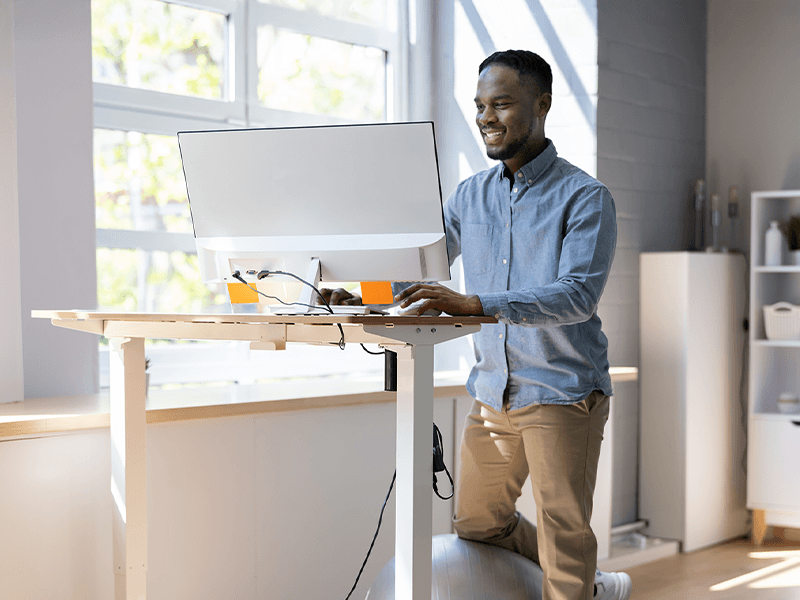
An adjustable standing desk makes the transition easier because you can move between sitting and standing throughout the day. Instead of committing to one position, you create a dynamic workspace that encourages flexibility.
Many people also notice increased energy when they stand periodically while working. Small posture changes activate muscles that remain inactive during prolonged sitting, which can help reduce the stiffness many office workers experience.
That said, it helps to understand the truth behind standing desks before expecting them to solve every posture problem. While they encourage healthier habits, they work best when paired with movement, stretching, and proper desk ergonomics.
Do Doctors Recommend Standing Desks?
Doctors generally agree that reducing prolonged sitting benefits overall health. Many healthcare professionals recommend standing desks as part of a broader strategy to stay active during the workday.
However, most experts emphasize balance rather than constant standing. The goal is to introduce movement and variation in posture rather than replacing one static position with another.
When used properly, the benefits of standing desk setups often include improved posture awareness, reduced stiffness, and greater engagement of core muscles that support the spine.
If back pain becomes persistent, severe, or spreads beyond the lower back, it may signal a more complex condition. In these situations, it helps to know when to see a doctor for back pain rather than relying solely on workspace changes.
How Long Should You Stand at a Standing Desk?
Experts generally recommend starting slowly when transitioning to a standing desk. Standing for short intervals helps your body adapt without creating fatigue in your feet or legs.
A common recommendation is to follow a sit-stand cycle throughout the day. Many people begin with 20 to 30 minutes of standing every hour before gradually increasing the time as their body adjusts.
Using an ergonomic standing desk setup also matters. Your monitor should sit at eye level, your elbows should bend comfortably at roughly ninety degrees, and your shoulders should remain relaxed while typing.
Small habits also make a difference. Stretching, shifting weight between feet, and walking briefly during breaks help prevent stiffness while maximizing the benefits of alternating positions.
What Are the Downsides of Standing Desks?
Standing desks provide advantages, but they also come with a few potential drawbacks. Understanding these limitations helps people use them more effectively.
Possible downsides include:
- Leg and foot fatigue during long-standing periods
- Poor posture if the desk height is incorrect
- Overestimating benefits without adding movement
- Initial discomfort while adjusting to new habits
These issues usually appear when people stand for long periods without breaks or fail to adjust their workstations properly. An adjustable standing desk helps address many of these concerns by enabling easy transitions between sitting and standing.
Proper footwear and a supportive floor mat can also reduce pressure on the feet and legs. When used thoughtfully, most people find that the advantages outweigh the temporary adjustment period.
Other Simple Strategies That Can Help Relieve Back Pain
Standing desks can certainly help reduce the time spent sitting, but they work best when combined with other healthy habits. Back pain rarely comes from a single cause. Instead, it often develops from a mix of posture, inactivity, muscle imbalance, and everyday stress.
One helpful strategy is to incorporate short movement breaks throughout the day. Even standing up and walking for a few minutes every hour can improve circulation and reduce stiffness in the spine and surrounding muscles. These small interruptions prevent your body from staying locked in the same position for too long.
Stretching also plays an important role. Gentle stretches for the hips, hamstrings, and lower back help counteract the tightness that develops during desk work. Many people who try standing desks for back pain discover that stretching throughout the day amplifies the relief they feel.
Strength training can also support long-term spinal health. Exercises that target the core, glutes, and back muscles help stabilize the spine and reduce strain during daily activities. When your body is stronger and more balanced, your posture improves naturally, even when you return to sitting.
Conclusion
Are standing desks good for you if you struggle with back pain during long workdays? In many cases, they can help by encouraging movement and reducing the amount of time you spend sitting. However, the real benefit comes from alternating between positions rather than standing constantly.
A standing desk works best when paired with good posture, regular breaks, and proper ergonomics. When used correctly, it can become a helpful tool for improving comfort and reducing strain throughout the workday. While it may not eliminate every cause of back pain, it often supports healthier daily habits.
If back pain is interfering with your workday, schedule a consultation with the Orthopedic Institute of NJ for expert evaluation and personalized treatment options to help you move and feel better.

OINJ PHYSICIAN’S ADVICE
I personally recommend standing desks for my patients who are sedentary at work. Standing forces more gluteal muscle contractions which can help with core strengthening. Sitting raises intradiscal pressure, increasing low back pain risk, especially with poor posture when standing up. Standing upright minimizes intradiscal pressure. If you do stand for prolonged periods of time, make sure to keep proper posture, adjust desk height, and (if safe) try standing on one foot for a small glute workout.
Christopher Castro, DO
Physiatrist
Physicians & Assistants

Related News & Insights
Sleep Support Pillows for Back Pain: Which Types Help — and How to Use Them Correctly
![woman with back pain in need of sleep support pillow]()
Blog
Mar 30, 2026
Sleep Support Pillows for Back Pain: Which Types Help — and How to Use Them Correctly
Read More
Mar 30, 2026
Best Stretches for Lower Back Pain: Safe and Effective Relief at Home
![woman with lower back pain stretching on mat]()

Blog
Oct 16, 2025
Best Stretches for Lower Back Pain: Safe and Effective Relief at Home
Read More
Oct 16, 2025