

Search
Find a Physician

The Best Low-Impact Exercises for Arthritis




Medically Reviewed by
Stephen Silva, M.D.Blog
Sep 24, 2026
Arthritis has a way of making you feel more breakable than you really are. One flare-up and suddenly you're second-guessing every stair, every walk, every reach for a top shelf. That fear is exactly why low-impact exercises for arthritis deserve a real look, since they let you move without paying for it later.
That fragile feeling pushes many people to avoid movement altogether, and it's an understandable reaction. But sitting still often makes joints stiffer and weaker over time. Skipping activity out of caution can quietly shrink your world, one skipped walk or missed gym session at a time.
The good news? You don't need to choose between protecting your joints and staying active. A handful of well-chosen movements can ease pain, keep you mobile, and even slow damage down over time. Here's what you should know before you start moving again.
How to exercise with arthritis
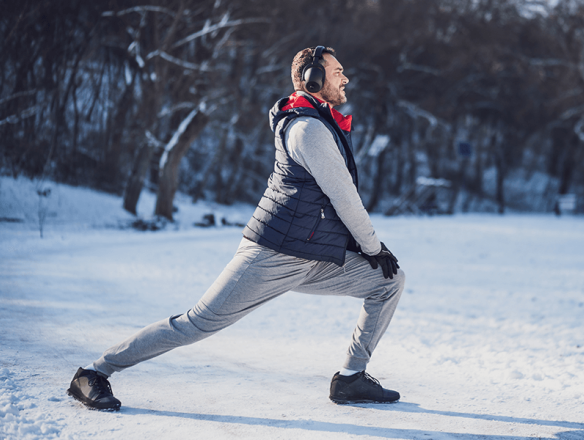
Starting an exercise routine with arthritis means finding movement that respects where your joints are right now, then building from there. A short warm-up, some gentle exercises for arthritis, and a slow pace will get you further than any intense workout ever could.
Talk to your doctor or a physical therapist before you begin, especially if you're managing pain in more than one joint. They can point out which motions to avoid and which ones actually help, so you build a routine that lasts instead of one that burns out fast.
Pay attention to how your body responds during and after activity. A little soreness the next day is normal, but sharp pain during movement signals you to stop and adjust. Over time, untreated strain on cartilage can contribute to joint degeneration, so working with your limits rather than against them protects you long term.
Consistency matters more than intensity. Ten minutes of movement most days beats one hard session a week. However, that doesn't mean every day looks the same, and easing off during a flare-up week is simply part of the process. Your joints respond better to steady, low-stress activity than to sudden bursts.
What exercise is good for arthritis
Not every workout suits achy joints, but plenty of options actually help. Swimming, walking, cycling, and yoga all fall into the category of low-impact exercises for arthritis because they move your joints through their full range without hammering them against hard surfaces.
Water-based movement deserves special mention here. The buoyancy takes pressure off your knees, hips, and spine while still giving your muscles real work to do. You see, it's the resistance of water, not the pounding of pavement, that makes the difference for many people.
If you're dealing with osteoarthritis in a weight-bearing joint, a pool session can feel like relief instead of another chore.
Strength training belongs in the mix too, even though people often skip it out of fear. Light resistance bands or simple bodyweight moves build the muscle around your joints, and stronger muscles mean less strain on the joint itself. That's the whole point of an arthritis workout that actually pays off long term.
Flexibility work rounds things out nicely. Gentle stretching, tai chi, and yoga keep your range of motion from shrinking, which happens naturally when joints stay stiff and unused for too long. None of this needs to be complicated or expensive to start paying off.
What are the 5 best exercises for arthritis?
If you're looking for a starting point, these five options come up again and again in research and physical therapy offices alike, and they provide a solid foundation for arthritis workouts at almost any fitness level.
- Walking: low cost, no equipment, and easy to adjust in pace or distance
- Swimming or water aerobics: full-body movement with almost no joint impact
- Cycling, stationary or outdoor: builds leg strength without pounding your knees
- Yoga: improves flexibility and balance while easing stiffness
- Strength training with light weights or bands: protects joints by supporting them with stronger muscles
Each of these fits into low-impact exercises for arthritis because none of them involve jarring, high-force movement. You can start small, maybe ten minutes at a time, and build from there as your comfort and confidence grow.
Can exercises help arthritis symptoms specifically, rather than just general fitness? Yes, based on how consistently these five show up across different studies and recommendations. The combination of movement, strength, and flexibility tends to outperform any single approach.
Try rotating through two or three of these options each week instead of sticking to just one. Variety keeps things interesting enough that you'll actually stick with it.
Can exercise make arthritis worse?
This question comes up a lot, and it makes sense. Nobody wants to make their joints worse trying to help them. The short answer is that the wrong kind of exercise can aggravate arthritis, but the right kind almost always helps more than it hurts.
High-impact activities like running on pavement, jumping, or heavy lifting with poor form put repeated stress on sensitive joints. That kind of pounding is usually what causes trouble, not gentle, controlled movement.
A well-known arthritis exercise study followed participants for several months and found that structured, moderate activity reduced pain and improved function for most people with joint issues, without worsening their condition. The researchers noted that inactivity, not exercise, was the bigger risk to long-term joint health.
So can exercises help arthritis without triggering a flare-up? For most people, yes, as long as the intensity matches their current ability. Start light, watch how your body reacts, and adjust from there rather than following a plan built for someone else's joints.
Pain that lingers well past a session, swelling afterward, or a joint that feels warmer than usual are signs to scale back and rest for a day or two. None of that means exercise is off the table; it just means the plan needs a smaller version.
Arthritis exercises for seniors
Age adds a few more things to consider, but it doesn't rule out exercise. If anything, staying active becomes more important as joints and muscles naturally lose strength over the years.
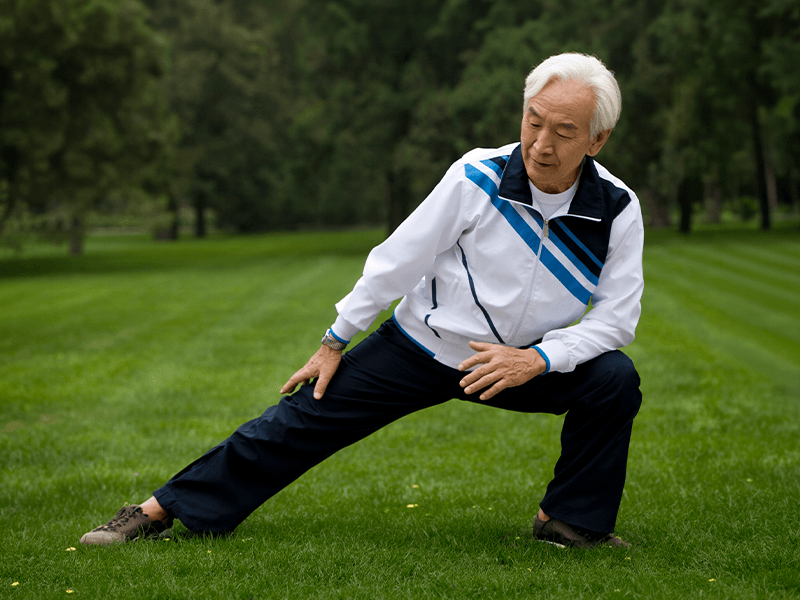
Balance work matters here just as much as joint-friendly movement. Falls are a real concern for older adults with arthritis, so exercises that build stability, like tai chi or standing leg lifts near a sturdy chair, deserve a spot in the routine alongside any arthritis workout.
Gentle exercises for arthritis, like seated stretches, pool walking, or short strolls around the block, help seniors stay consistent without overdoing it. Shorter, more frequent sessions often work better than one long workout that leaves you sore for days afterward.
Workouts for arthritis don't need to look impressive to be effective. A few minutes of movement, done regularly and adjusted to how you feel that day, adds up to real, lasting benefit over months and years, even if progress feels slow at first.
A supportive setting also makes a real difference for older adults. A local senior center class or walking group adds motivation that's hard to keep up alone, and movement tends to stick better when you share it with someone else.
Wrap Up
Low-impact exercises for arthritis give your joints a way to stay strong without extra strain, so they can keep up with you for years to come. Fear of pain shouldn't be the reason you stop moving altogether, especially when the right kind of activity can genuinely ease your symptoms.
Start small, stay consistent, and see a doctor if you're unsure where to begin. Your joints were built to move, and a little patience with the right routine can carry you further than you might expect.
Living with arthritis doesn't mean you have to stop moving. The specialists at Orthopedic Institute of NJ can help you find treatment options to manage pain and stay active.

OINJ PHYSICIAN’S ADVICE
Arthritis doesn’t have to mean giving up the activities you enjoy. With the right diagnosis and treatment plan, many people can reduce their pain, improve their mobility, and get back to doing the things they love.
Stephen Silva, M.D.
Reconstruction Orthopedic Surgeon at OINJ
Physicians & Assistants


Related News & Insights
Patellofemoral Pain Syndrome Exercises: How to Help Runner's Knee
![woman performing Patellofemoral pain syndrome exercises]()
Blog
Apr 17, 2026
Patellofemoral Pain Syndrome Exercises: How to Help Runner's Knee
Read More
Apr 17, 2026