


Search
Find a Physician

Hip Pain at Night: What’s Causing It and How to Sleep More Comfortably





Medically Reviewed by
Alex H. Shin, DOBlog
Dec 23, 2025
Hip pain at night often starts quietly, showing up in the evening when you finally sit down or lie in bed, and it can feel confusing and frustrating. You shift positions, stretch a little, and wonder why your hips suddenly ache when the day seemed perfectly normal overall to you.
By morning, the discomfort fades, you move around easily, and you convince yourself it was nothing serious at all. That relief tricks many people into ignoring the problem, assuming it was temporary, stress-related, or caused by a strange sleeping position that will not return again later in life quietly.
Then evening comes again, the pain returns, and sleep becomes a nightly battle you did not plan for. This cycle raises important questions about why hips hurt more at night and what practical changes, habits, or sleep adjustments can help you rest better and wake up without discomfort tomorrow comfortably.
Why is hip pain worse at night?
Hip pain at night often feels worse because your body finally slows down and stops masking discomfort. During the day, movement, adrenaline, and distractions can dull pain signals. Once you lie down, pressure shifts, inflammation becomes noticeable, and your brain focuses more on physical sensations instead of tasks or noise.
Another reason pain intensifies is reduced circulation while resting. When you stay still for long periods, blood flow slows, joints stiffen, and irritated tissues become more sensitive. This is why hip pain at night can appear suddenly, even if you mainly felt fine while walking or sitting earlier.
Sleeping position also plays a major role. Certain sleeping positions and mattress firmness can also affect the alignment of the hip and spine potentially accentuating symptoms further.
Underlying hip conditions tend to announce themselves at night as well. Issues like bursitis, arthritis, tendon irritation, or nerve involvement often flare during rest. Without daytime movement to keep joints lubricated, these hip conditions trigger discomfort, stiffness, and pain that interrupt sleep and repeat night after night.
Causes of hip pain
Hip pain at night rarely has a single cause and usually stems from a mix of mechanical stress, inflammation, and how your body responds to rest. When someone says their hip hurts when sleeping, it often signals an underlying issue that daytime movement temporarily hides but nighttime stillness exposes.
- Inflammation of bursae or tendons
- Joint structure problems
- Nerve compression (Typically from the lumbar spine or low back)
- Poor sleep posture or mattress support
- Reduced circulation during prolonged rest
Inflammation sits near the top of the list for many people. Conditions like bursitis or tendon irritation worsen when tissues stay compressed for hours. As blood flow slows during sleep, inflammatory chemicals linger longer, which explains why hip pain at night can feel sharper once you stop moving entirely.
Structural issues are another major contributor. Hip impingement occurswhen the ball and socket of the hip joint do not move smoothly together. Certain sleep positions exaggerate this contact, irritating cartilage and surrounding tissue, which can lead to deep, aching pain that builds as the night goes on.
Nerve involvement also plays a role, especially when posture is off. A mattress that allows the hips to sink unevenly, or a habitual side-sleeping position, can compress nerves and bursae. Over time, this creates pressure sensations, stiffness, and pain that only become obvious once the body stays still long enough.
A fast way to relieve hip pain
When hip pain flares up late in the day, quick relief often comes from gentle movement instead of complete rest. Light stretching increases circulation, reduces stiffness, and signals muscles to relax. Simple mobility drills can calm irritated tissue before bedtime, making it easier to settle into sleep without discomfort.
Targeted exercises for hip problems work best when they stay controlled and pain-free. Exercises such as lute bridges, seated hip rotations, and gentle hip flexor stretches activate supporting muscles without stressing the joint. Consistency matters more than intensity, especially when hip pain at night disrupts rest and recovery.
Heat can also speed relief when combined with movement. A warm shower or heating pad loosens tight muscles and improves blood flow. Follow it with slow breathing and stretching to reset tension. This simple routine often reduces nighttime flare-ups and prepares your hips for more comfortable sleep.
Best sleeping positions for hip pain
Finding the right position can dramatically change how your hips feel overnight. The goal is to keep your spine and pelvis aligned while reducing pressure on sensitive areas. Small adjustments often matter more than buying new gear or changing your entire sleep routine immediately.
Side sleepers should place a pillow between their knees to prevent the top leg from pulling the hip forward. Back sleepers benefit from a pillow under the knees to reduce lower back tension. These simple ways to sleep with hip pain reduce joint compression during long periods of stillness.
Avoid curling tightly or sleeping directly on the painful hip. If you switch positions during the night, keep pillows nearby to support alignment quickly. Over time, consistent positioning reduces irritation, improves circulation, and allows inflamed tissues to calm rather than repeatedly flare.
How to prevent hip pain at night
Prevention starts earlier than bedtime. Daytime habits like prolonged sitting, uneven weight bearing, or skipping warm-ups quietly stress the hips. Addressing those patterns reduces nighttime flare-ups before they begin, rather than reacting once pain already interrupts sleep.
A supportive mattress and proper pillow height keep hips neutral throughout the night. Regular stretching, light strengthening, and avoiding late evening high-impact activity also help. Many people ask, "How do I stop my hip from hurting when I sleep?" The answer usually involves small daily adjustments.
Consistency matters most. Keep a short evening routine that includes movement, posture awareness, and relaxation. Over time, these habits reduce inflammation, improve joint mechanics, and break the cycle of pain returning night after night. Prevention builds comfort gradually, not overnight.
Wrap up
Hip pain at night can feel unpredictable, frustrating, and exhausting, especially when it disappears by morning only to return after sunset. Understanding why this happens helps you stop dismissing the pain and start addressing it properly. Small changes in movement, sleep posture, and daily habits can significantly improve comfort.
Paying attention to early signals, adjusting how you sleep, and supporting your hips consistently can break the cycle of recurring discomfort. When you combine awareness with simple routines and supportive positioning, restful sleep becomes possible again. Over time, these practical steps help your hips recover instead of reminding you of pain each night.
Learn the common causes of hip pain at night and get practical tips to sleep more comfortably, along with guidance on when to seek care from the Orthopedic Institute of NJ.

OINJ PHYSICIAN’S ADVICE
Hip pain can result from a range of conditions (including arthritis, hip impingement, and nerve-related disorders.) While symptoms may begin subtly, some of these conditions can progress over time and lead to increasing pain or functional limitations. Early evaluation allows for an accurate diagnosis and timely, often conservative, treatment. If your hip pain is worsening or affecting your daily activities, I recommend scheduling an evaluation with OINJ to determine the appropriate next steps.
Alex H. Shin, DO
Adult Reconstruction Orthopedic Surgeon
Physicians & Assistants


Related News & Insights
Sleep Support Pillows for Back Pain: Which Types Help — and How to Use Them Correctly
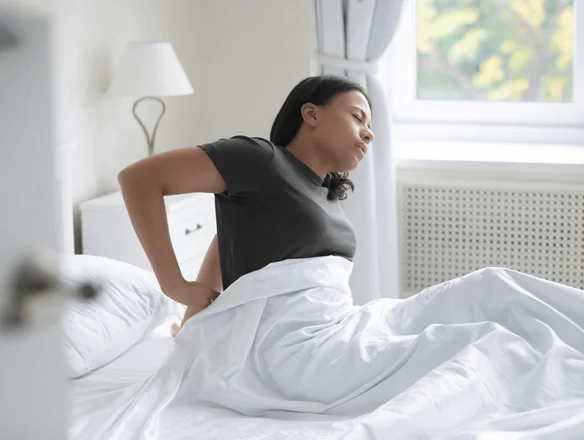
![woman with back pain in need of sleep support pillow]()
Blog
Mar 30, 2026
Sleep Support Pillows for Back Pain: Which Types Help — and How to Use Them Correctly
Read More
Mar 30, 2026
How to Sleep with Shoulder Pain: Positions, Pillows, and Do's & Don’ts
![man with shoulder pain after sleeping]()

Blog
Sep 23, 2025
How to Sleep with Shoulder Pain: Positions, Pillows, and Do's & Don’ts
Read More
Sep 23, 2025

Shoulder Pain from Sleeping? Here Are Possible Reasons Why and What You Can Do
![Shoulder pain from sleeping on side]()

Blog
Dec 3, 2021
Shoulder Pain from Sleeping? Here Are Possible Reasons Why and What You Can Do
Read More
Dec 3, 2021
Are Standing Desks Good for You? Benefits of Relieving Back Pain
![man working on computer using standing desk for back pain]()

Blog
Mar 17, 2026
Are Standing Desks Good for You? Benefits of Relieving Back Pain
Read More
Mar 17, 2026